
Other Treatments
Zoom Whitening
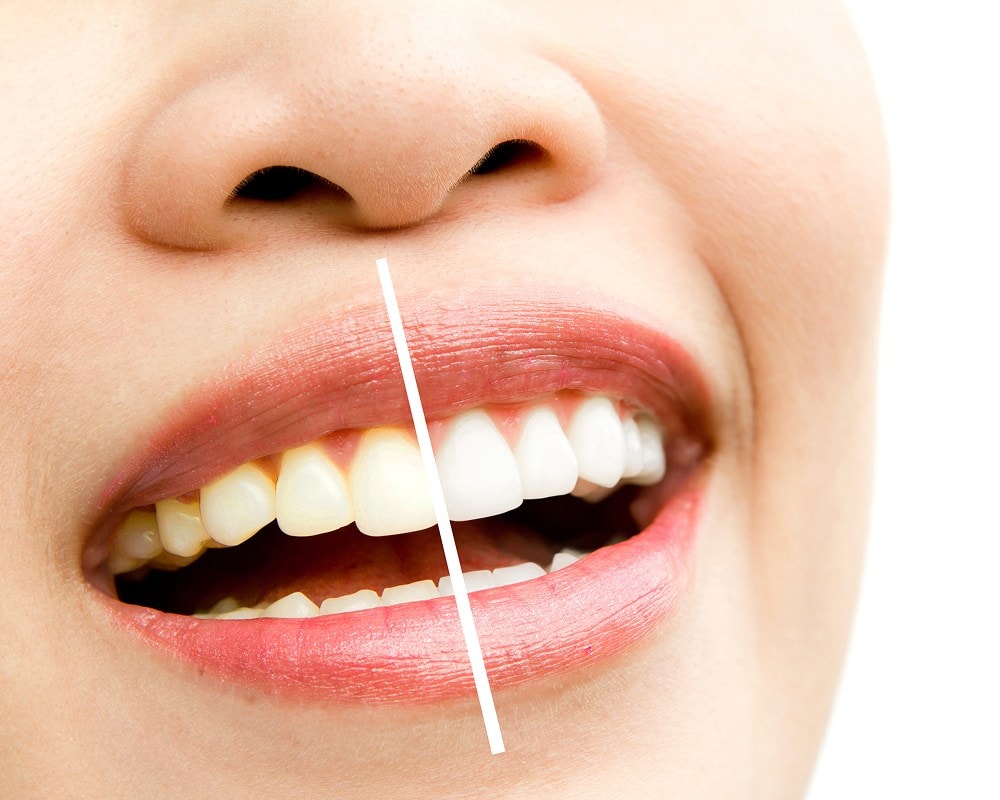
Philips Zoom is a professional, in-office whitening treatment that lifts stains from coffee, tea, red wine, tobacco, and ordinary aging. It happens in a single visit of about an hour, and most patients leave several shades brighter — a result that over-the-counter strips and trays generally can’t match, because the whitening gel our doctors use is far stronger than anything sold at a drugstore.
The process is straightforward. Our doctors start with an exam to confirm whitening will actually work for your teeth, then place a protective barrier over your gums and lips so the gel only touches enamel. A hydrogen peroxide gel goes on, and the Zoom lamp activates it, letting oxygen pass into the enamel and dentin to break down stains without altering the structure of the tooth.
That cycle runs about 15 minutes and repeats roughly three times, with fresh gel each round. Afterward, your teeth are cleaned, and you’ll go home with aftercare instructions and a short list of things to avoid for the first couple of days, while enamel is more absorbent than usual.
Timing matters if you’re an orthodontic patient. Whitening is done after braces come off, not during treatment, because brackets shield part of each tooth and you’d end up with pale patches where they used to be. That makes Zoom a natural finish to orthodontic care: teeth are straight, everything is freshly cleaned, and you see the whole result at once. Plenty of our Invisalign patients do the same thing at the end of their treatment.
Results last a good while with reasonable care — regular brushing and flossing, keeping up your dental cleanings, and going easy on the things that stained your teeth in the first place. If you’d like to know whether Zoom is a good fit for you, our doctors will take a look and give you a straight answer at a free consult.

Retainers
Finishing braces or Invisalign isn’t quite the end of treatment. Teeth are held in their new positions by bone and gum tissue that need time to settle, and left on their own they drift back toward where they started. A retainer is what protects the result you waited for.
Teeth shift gradually after treatment, usually the lower front teeth first, and it can happen years later. Wearing your retainer the way our doctors prescribe is the one thing that reliably prevents it. Retention is planned as part of your treatment from the beginning, so you’ll know which retainer you’re getting and how long you’ll wear it before your braces come off or your last aligner goes in the case.
Most patients wear a clear removable retainer that fits over the teeth like an aligner. It comes out for eating and brushing and is hard to notice when it’s in. Some patients get a fixed retainer — a thin wire bonded behind the front teeth that stays in place and asks nothing of you day to day. A traditional wire-and-acrylic retainer is still the right answer in some cases.
Our doctors will recommend the option that fits your bite, your treatment, and your habits, and some patients end up with a combination of both.
Rinse a removable retainer every time you take it out, brush it gently with cool water, and keep it in its case whenever it isn’t in your mouth. Retainers get thrown out in napkins and chewed by dogs far more often than they wear out. Skip hot water and the dishwasher, which warp the plastic. With a fixed retainer, a floss threader or water flosser keeps the area behind the wire clean. If a retainer cracks, feels loose, or stops fitting, call us instead of forcing it. A small fix now beats repeating treatment later.
If you’ve lost a retainer or haven’t worn one in a while, our doctors can check how much your teeth have moved and get you back into retention. Bring it up at a free consult and you’ll get a straight answer.